I found this source to be extremely useful when gaining background knowledege about my locations. I think it could be useful for future classes so I’ve attached it below. The link leads to a great list of steps!
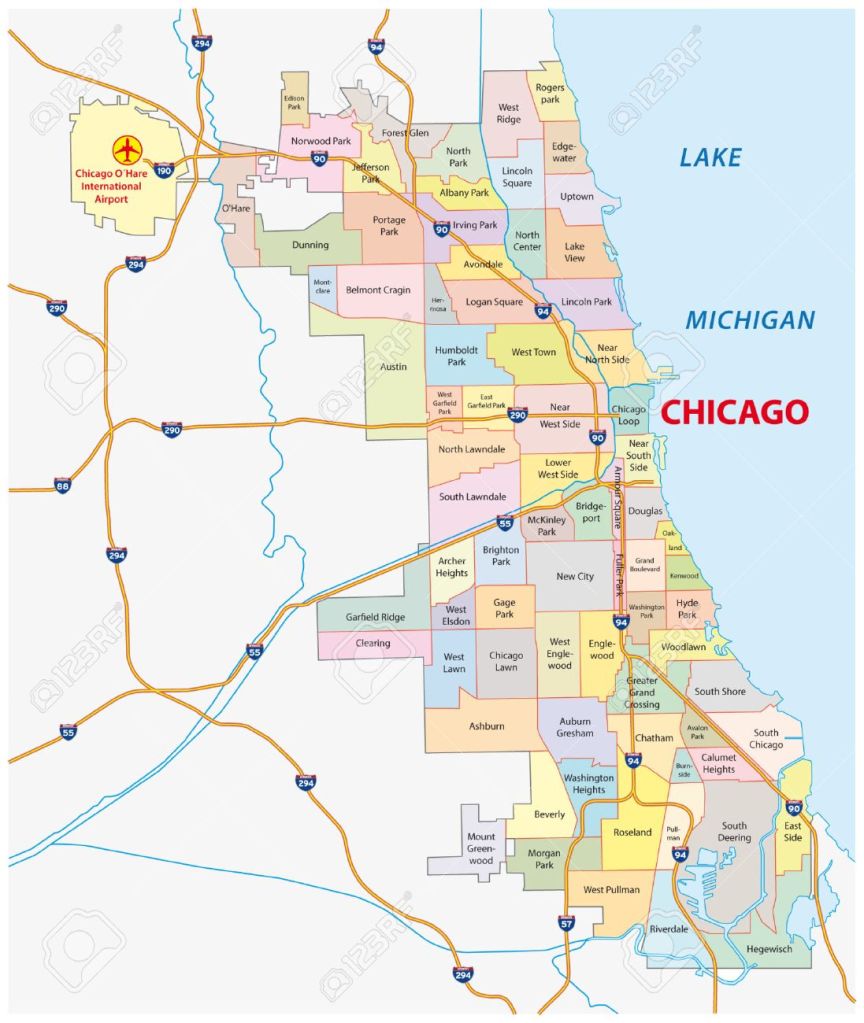
I found this source to be extremely useful when gaining background knowledege about my locations. I think it could be useful for future classes so I’ve attached it below. The link leads to a great list of steps!
https://www.jeffersonpark.net/about-us/ https://www.chicago- l.org/stations/jefferson_pk.html
http://www.architecture.org/learn/resources/buildings-of- chicago/building/the-chicago-l/
https://www.chicagoparkdistrict.com/about-us/history-chicagos-park
https://www.chibarproject.com/Reviews/GaleStreet/GaleStreet.html
6348 W. Higgins Ave, Chicago, IL 60630
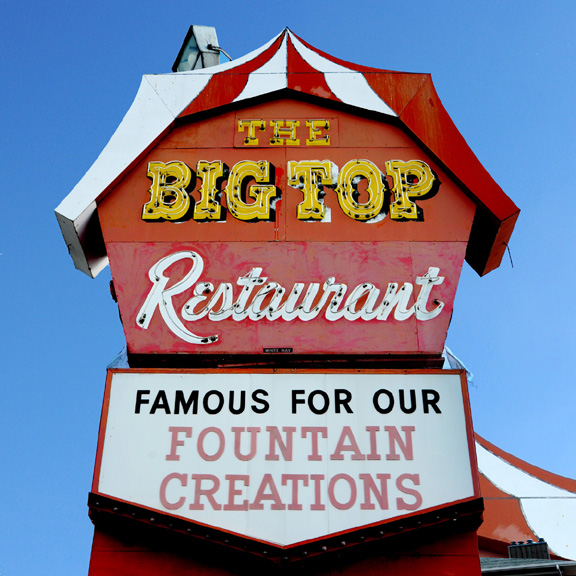
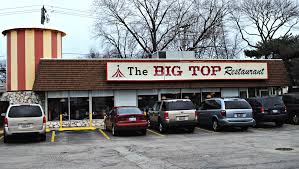
The old fashioned carnival themed sign grabs your attention from a mile away. It reads, “The Big Top Restaurant… Famous For Our Fountain Creations.” Sitting on a well traveled road for northsiders in Chicago, Big Top restaurant is the neighborhood go-to brunch restaurant. This building is the most contemporary on my guide so it is also the last destination. In 1976 Big Top opened their doors for the first time. The restaurant, open 24 hours a day and 7 days a week, provided meals for people any day, any time for 43 years before it’s closing this past spring. During the time in which this building was constructed, the economic and physical state of the neighborhood wasn’t drastically different, therefore many of the urban developments that made this landscape are developments that continue to affect landscapes today. The property is not only on a very busy and central road in the neighborhood, it was also surrounded by a grocery store, gas stations and other establishments. These developments created the perfect environment for this property to inhabit. Everything that surrounded Big Top were sources of customers, hence the success of the building.
Evidence of this pattern can be seen directly through the surrounding businesses. Since the late 80’s, establishments have multiplied. The more successful businesses there are in one area, the more likely people will continue to depend on those places for their services or products. And while they’re in one establishment they see other appealing businesses, hence the chain in customers.
Since the closing of the restaurant, this will be a very popular development on the market. Given its importance to the community, I can predict it being re-opened and ran the same way under different ownership. But according to the urban processes in this landscape, this property will be remodeled into a “trendy” restaurant. The land is central to the neighborhood, and close to the train station. In addition, like I previously mentioned at Gale Street, gentrification has occurred in many nearby similar neighborhoods. Therefore it is likely that Big Top will be a big step in that direction if bought by the wrong person.
5521 W. Higgins Ave, Chicago, IL 60630
When walking down Gale Street towards Higgins Ave. there is a prominent house that sticks out: 5521 W. Higgins Ave. From full porch filled with very decorative spindlework on the supports to the layered roof including a round tower to the asymmetrical layout of the entire house… it screamed Queen Anne. This was a very important finding because it is the only building in this area that nearly goes all the way back to Elijah Wentworth’s time. These homes were typically built in the 1880s until the early 1900s. This was right around the time that Jefferson Park was becoming established as a neighborhood in Chicago. The urban development that essentially created this landscape was the increase in population that occurred in this exact area in early 1860s. The new businesses also brought new individuals and families who needed homes and this was one of them. The entire development of this area starting with the Wentworth Tavern, created a demand for homes such as this one.
The evidence in this development is seen both in the building itself and the surrounding properties. Firstly, this building built in 1890 shows the presence of families in that area at the time. This style of home is very large and is meant to hold big families. In addition, it’s a very fancy style of architecture and that reveals the wealth of the people who once lived in the area. Today, the area is still charming and that is due to the previous generations who inhabited this location. When thinking about the surrounding environment, this house exists because of the population that Wentworth brought to the area.
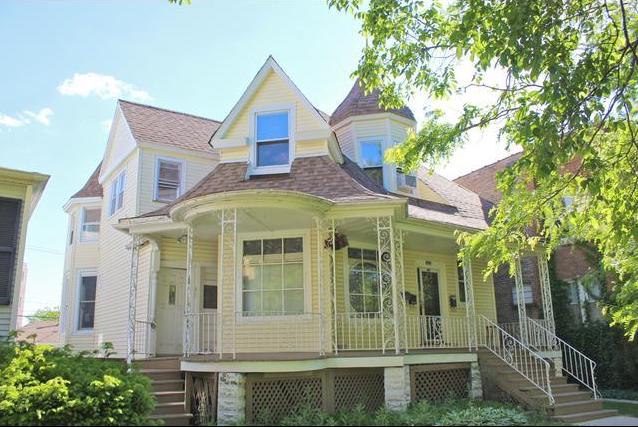
The reason that this home sticks out so much is because it’s architectural style is drastically different from the surrounding homes. The landscape around it has been remade and renovated. Most of the neighboring homes are new apartment buildings or bungalows. Many of the surrounding businesses are also new, yet the Queen Anne still stands. This building is a historical staple of this neighborhood and will continue to be preserved. Therefore the urban development of the environment surrounding it won’t make much of an impact.
4914 N Milwaukee Ave, Chicago, IL 60630
The Gale Street Inn that I’ve always known sat on the corner of Milwaukee Ave. and Gale St. It’s fancy structure with hanging roofs, and dark green siding never indicated a historical significance in my mind. But I added it to my field guide because of its close proximity to the transit center, the most historically significant location on this map. I inferred that it had to have some historical context if it was so close to what was once the Wentworth Inn, and it did!
The original Gale Street Inn was established in a tavern (that no longer exists) across the street. It no longer exists because it was torn down to make room for the transit center! In 1963 the restaurant was owned and opened by George and Joan Chioles. It was a successful business from the start thanks to their famous ribs. They brought in a significant amount of business in their tavern for about six years until the city forced them to shut down so that they could tear down the building and create the transit center. The couple didn’t want to leave that location, especially given the influx of people the transit center would bring so they purchased the building directly across the street and continued business as usual. In 1985 they sold the building to new owners but the success of the restaurant still continued.
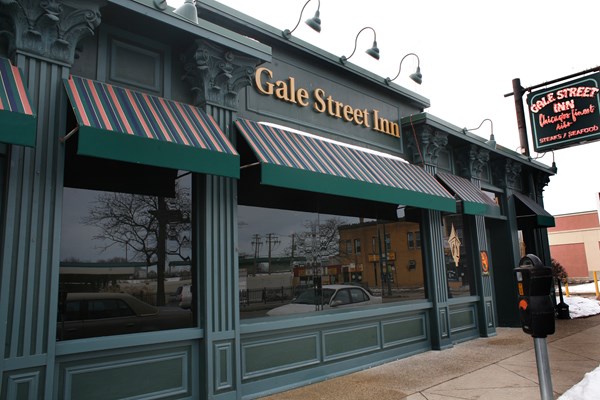
Given the historical development of the transit system, this restaurant that was once only truly appreciated and known to locals was now a Chicago staple. Commuters from the city and the suburbs who traveled through the Jefferson Park transit system were now introduced to the hidden gem on the corner, creating a larger network of customers and more exposure of the neighborhood itself to outsiders. This indirectly contributed to the population growth of the neighborhood.
In the built environment today, the transit system directly across the street has grown immensely. This growth means a larger population of people are coming into Jefferson Park than ever before. Today, on a friday night, it is unlikely that you can order a slab of ribs past seven pm because they’re sold out by then. The customers and demand brought by the surrounding system of transportation continues to contribute to this restaurant. In addition, other businesses have followed in Gale Street Inn’s example and are taking advantage of the fantastic location. I mentioned Weston’s in our walk through the transit center but that is truly the first establishment since Gale Street that has brought a business that truly caters to the population around them; commuters.
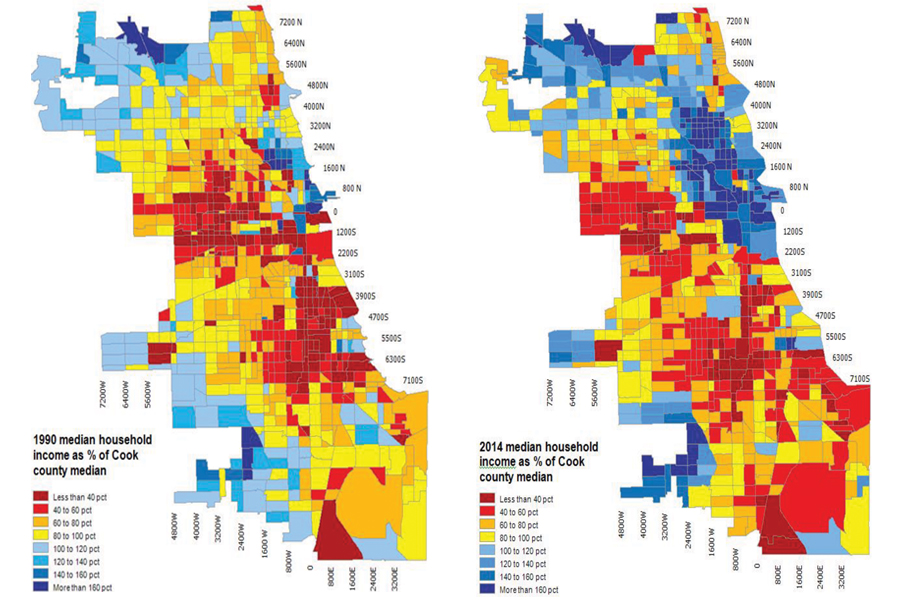
Given the more recent establishment of Gale Street Inn compared to other buildings on this guide, there isn’t necessarily a remake of this building or environment occurring. There is a slight shift happening in the types of businesses being built in that section of Milwaukee Ave. Again, the transportation hub has the largest impact on the community. Given the exposure it’s given Jefferson Park to a variety of individuals and the neighborhoods close proximity to the city, I predict that the area is one of the next “up and coming neighborhoods” in Chicago. The community itself is very middle class as a whole but I believe that it still has the potential to become gentrified in the next decade. Milwaukee Ave. spreads through the Logan Square and Wicker Park neighborhoods, both of which have been gentrified in the past twenty years. Jefferson Park is just a few miles north of these neighborhoods. The easy transportation, nice housing, close proximity to downtown Chicago and somewhat cheap real estate, makes this neighorhood the perfect target.
4917 N. Milwaukee Ave, Chicago, IL 60630
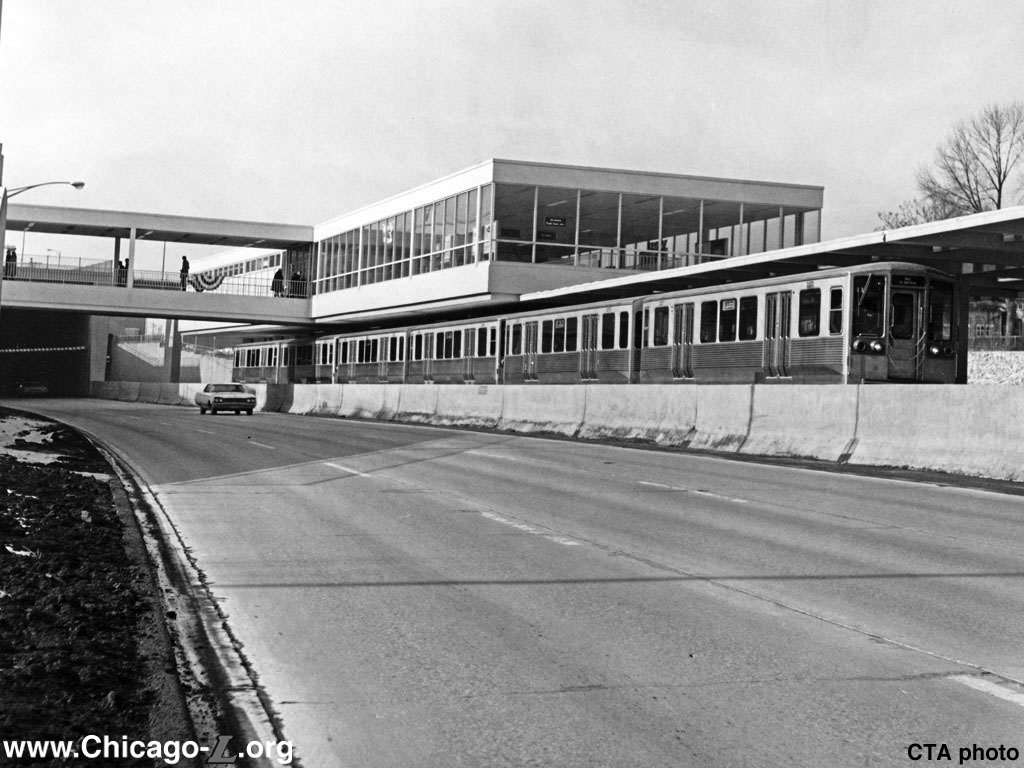
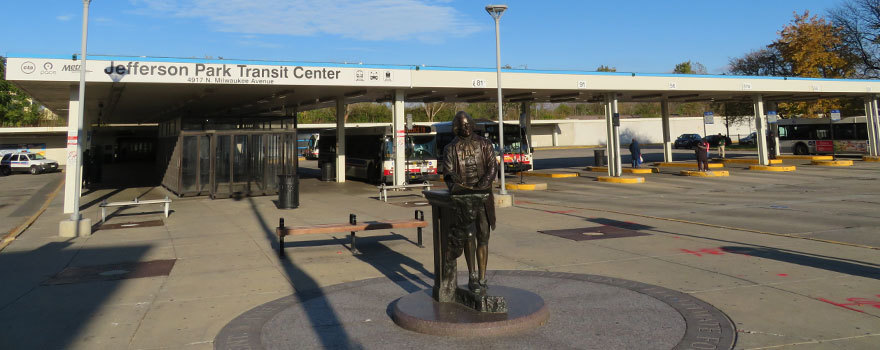
The first elevated train (also known as the “L”) in Chicago ran on June 6th, 1892. This was a very significant event in the city’s history as the creation of this transportation not only decongested the city of street-cars and trolleys, it also gave residents access to quicker and more efficient transit. This first “L” line ran through the southside of Chicago, from Pershing road to Wabash Ave. A year later the World’s Columbian Exposition of 1893 occurred and the line was expanded further north to Jackson Park. These newly constructed trains were operated by private companies until 1947 when the city purchased the private companies and created one unified transportation system operated by the CTA (Chicago Transit Association). This unification sparked the increased expansion of the train system, including the creation of the Jefferson Park Transit Center in 1970. I choose this as one of the first locations in my guide because I knew that the city would only choose this location to build the transit station if it had some historical significance. Therefore I knew that this location must’ve been very populated in the early years of it’s existence. But after doing my research I uncovered something that I wasn’t expecting…
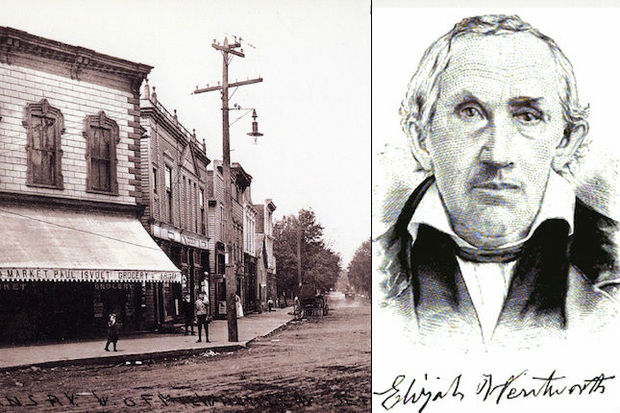
Before the creation of this transportation system in Jefferson Park, this land was home to the most historically significant building in the neighborhood. In 1830, Chicago resident Elijah Wentworth moved from a property near the Chicago River to Sand Ridge (present-day Jefferson Park). He created a two story high log tavern known as “The Wentworth Tavern.” This building not only served as his residency, it was also an inn and the very first building in the area. Wentworth inn quickly brought people to the newly inhabited community and by the time he sold it in 1850, there were 50 new buildings. The same year town changed the name from Sand Ridge to Jefferson Township. And in the next decade, the population grew rapidly to 800 people. With the newly growing population, various businesses were also established. Eventually the tavern was torn down to make room for the transit center but this establishment will always mark the birth of Jefferson Park, Chicago.
The current environment surrounding the transit center features many small businesses of various services, similar to the original environment previously described. The lively atmosphere of the area also shows the rationality of creating the transit center in this particular area. The location is close to residencies, businesses, and downtown Chicago; all of which are prime locations for commuters.
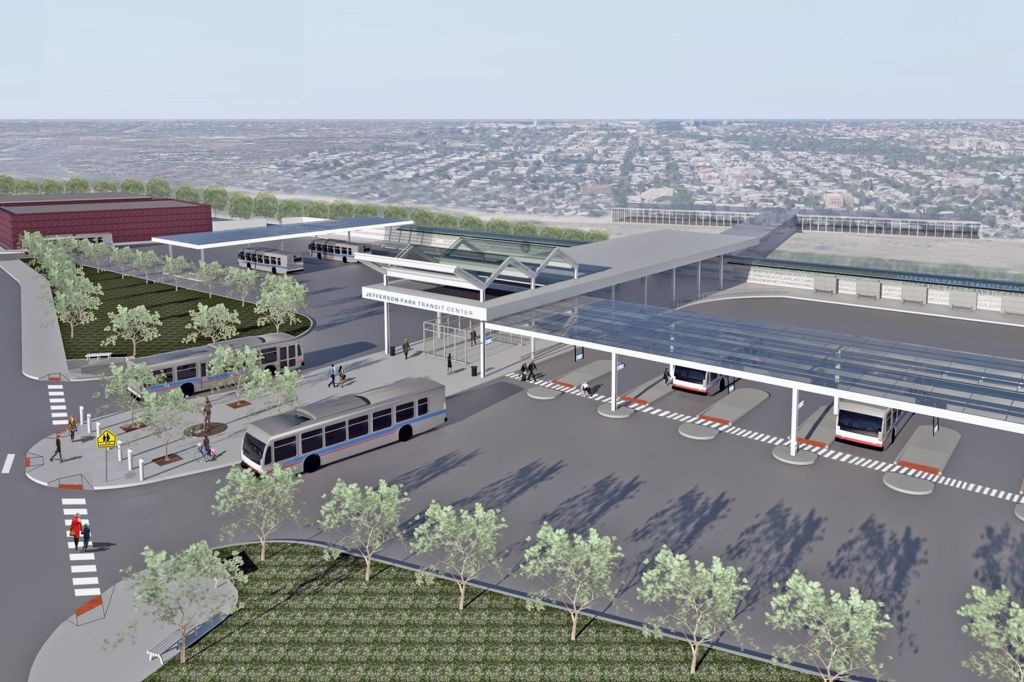
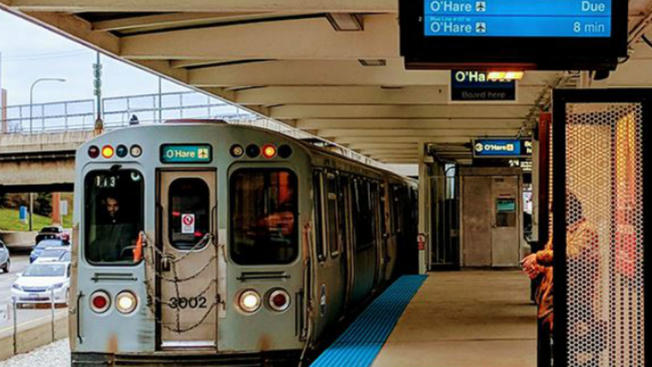
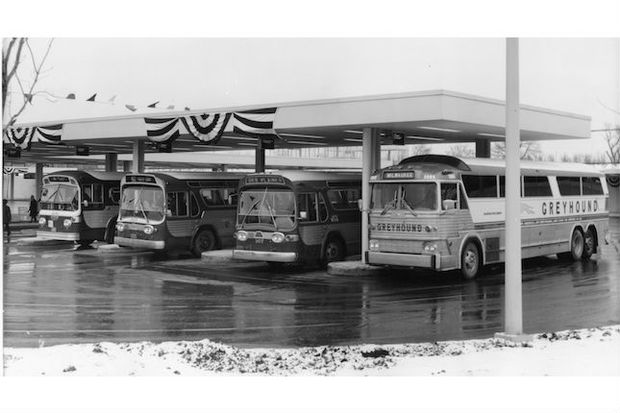
Recently, the transit center received a $25 million dollar renovation. Renovations were centered around “modernizing” the station and included: new lighting, bus canopies, artwork and signs. The investment in this particular station is attributed to the hub of transportation increasingly becoming one of the busiest stations on the blue line. This is due to the multitude of transportation it provides. It currently is home to a stop on the Union Pacific Northwest Metra line and 14 bus connections. Changes surrounding the center will also attribute to the influx of people utilizing this station. Directly across the street “Weston’s Coffee and Tap Co.” opened just a year ago. Given its close proximity to the transit center, the establishment is a popular spot for commuters to grab a brew or cup of coffee. The transit center and new businesses such as Weston’s will continue to transform the area into a staple spot in Chicago.
4822 N. Long Ave, Chicago, IL 60630
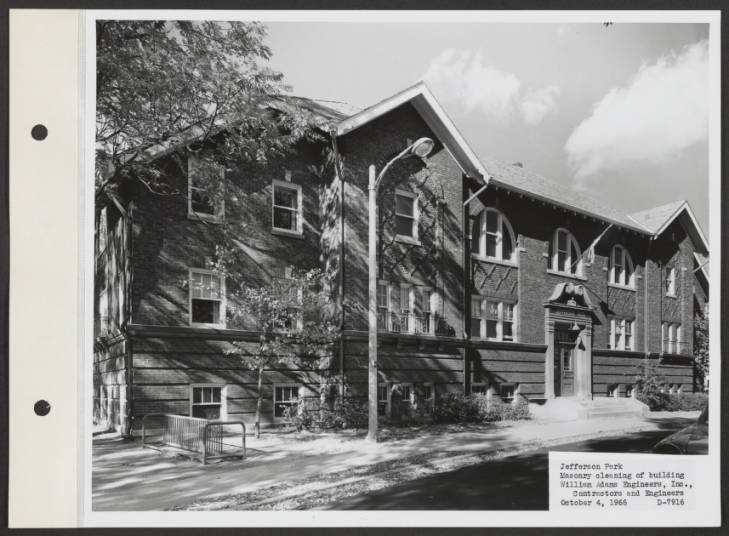
The establishment of a park in a community is a sign that the population is significant enough to make use of it. The field house sitting in the middle of Jefferson Memorial Park featured a brick building, with a steep roof encased by multiple gables, wooden framed windows and an eye-catching embellishment surrounding the door; a Tudor style building. Observing this style allowed me to recognize when it may have been built; anywhere from 1900 to 1940. Upon further research, I found that the land for the park was bought by the Jefferson Park District in 1920 and by 1930 it was landscaped and the field house was built. Given my knowledge of the initial founding of the neighborhood by Elijah Wentworth, I know that this was one of the many facilities designed in the early 1900s to serve the growing population.
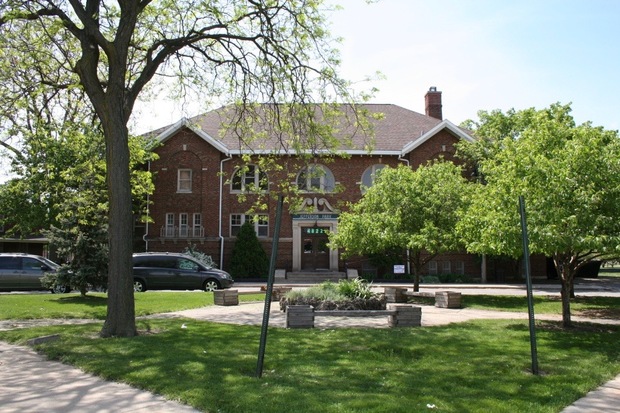
The fieldhouse was designed by Clarence Hatzfeld. Hatzfeld was a Chicago architect who specialized in designing fieldhouses. His work is featured in many of the historic Chicago Park District field houses. The creation of this building was due to the population growth and growing demand for a place of public recreation in the early 1900s. In the late 1800s when Jefferson Park was established, various businesses were also established. With those businesses came individuals with families who owned them. This park and fieldhouse provided recreation for those families, inherently serving the shifting population of more families inhabiting the neighborhood. In addition, the creation of this building and park came after an 1850’s movement by the citizens of the city of Chicago that demanded more parks be built. During this time much of the city wasn’t “attractive” as it was very industrialized and overpopulated. After the movement, the protestors were heard and parks such as Jefferson Memorial were created for communities to enjoy.
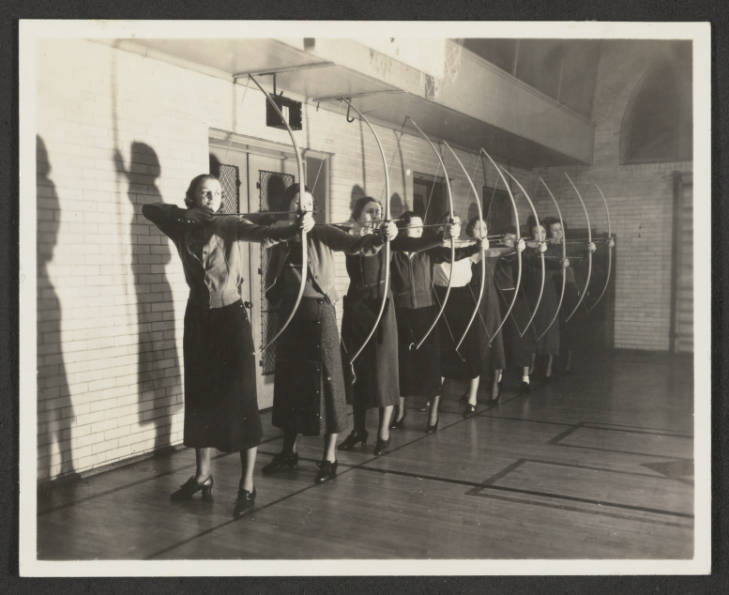
The evidence of the community it was built to serve is seen in the services provided. The fieldhouse offered various activities for families and community members to enjoy such as archery, baseball, arts and crafts, baseball, etc. On the land itself, playgrounds and open land were provided for the community to share. This was built so that the growing population could connect.
With the advancement of society and technology making up urban development, this property has constantly been updated and “remade.” Some of those changes include: inground pool, a large variety of sports offered, services such as summer camp and afterschool programs and more. When thinking about the increase in child care programs being offered this can be directly correlated to the shift in gender roles over time, specifically in urban areas. A large majority of women didn’t enter the workforce until the 1960s. Prior to the feminist movement that took place during this time, women typically stayed at home and took care of the children. Therefore childcare programs weren’t necessary, the women provided childcare. But as times have shifted, so have gender roles. The number of women in the workforce in 2019 compared to the early and mid-1900s is drastically different. Establishments such as this park have also shifted their services to keep up with that shift. Hence the creation of childcare programs.

 Field Guide to the Changing City: Jefferson Park, Chicago