4917 N. Milwaukee Ave, Chicago, IL 60630
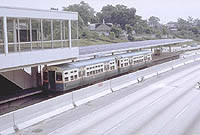
The first elevated train (also known as the “L”) in Chicago ran on June 6th, 1892. This was a very significant event in the city’s history as the creation of this transportation not only decongested the city of street-cars and trolleys, it also gave residents access to quicker and more efficient transit. This first “L” line ran through the southside of Chicago, from Pershing road to Wabash Ave. A year later the World’s Columbian Exposition of 1893 occurred and the line was expanded further north to Jackson Park. These newly constructed trains were operated by private companies until 1947 when the city purchased the private companies and created one unified transportation system operated by the CTA (Chicago Transit Association). This unification sparked the increased expansion of the train system, including the creation of the Jefferson Park Transit Center in 1970. I choose this as one of the first locations in my guide because I knew that the city would only choose this location to build the transit station if it had some historical significance. Therefore I knew that this location must’ve been very populated in the early years of it’s existence. But after doing my research I uncovered something that I wasn’t expecting…
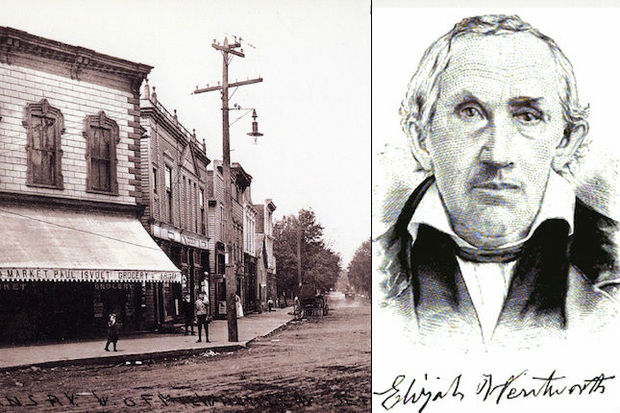
Before the creation of this transportation system in Jefferson Park, this land was home to the most historically significant building in the neighborhood. In 1830, Chicago resident Elijah Wentworth moved from a property near the Chicago River to Sand Ridge (present-day Jefferson Park). He created a two story high log tavern known as “The Wentworth Tavern.” This building not only served as his residency, it was also an inn and the very first building in the area. Wentworth inn quickly brought people to the newly inhabited community and by the time he sold it in 1850, there were 50 new buildings. The same year town changed the name from Sand Ridge to Jefferson Township. And in the next decade, the population grew rapidly to 800 people. With the newly growing population, various businesses were also established. Eventually the tavern was torn down to make room for the transit center but this establishment will always mark the birth of Jefferson Park, Chicago.
The current environment surrounding the transit center features many small businesses of various services, similar to the original environment previously described. The lively atmosphere of the area also shows the rationality of creating the transit center in this particular area. The location is close to residencies, businesses, and downtown Chicago; all of which are prime locations for commuters.
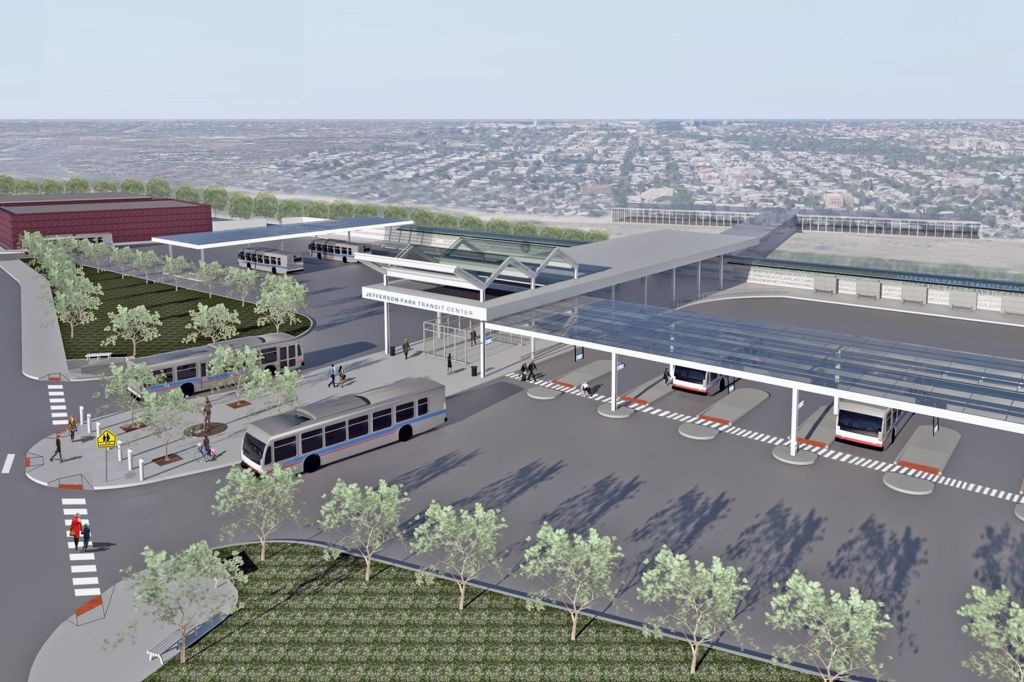
Recently, the transit center received a $25 million dollar renovation. Renovations were centered around “modernizing” the station and included: new lighting, bus canopies, artwork and signs. The investment in this particular station is attributed to the hub of transportation increasingly becoming one of the busiest stations on the blue line. This is due to the multitude of transportation it provides. It currently is home to a stop on the Union Pacific Northwest Metra line and 14 bus connections. Changes surrounding the center will also attribute to the influx of people utilizing this station. Directly across the street “Weston’s Coffee and Tap Co.” opened just a year ago. Given its close proximity to the transit center, the establishment is a popular spot for commuters to grab a brew or cup of coffee. The transit center and new businesses such as Weston’s will continue to transform the area into a staple spot in Chicago.
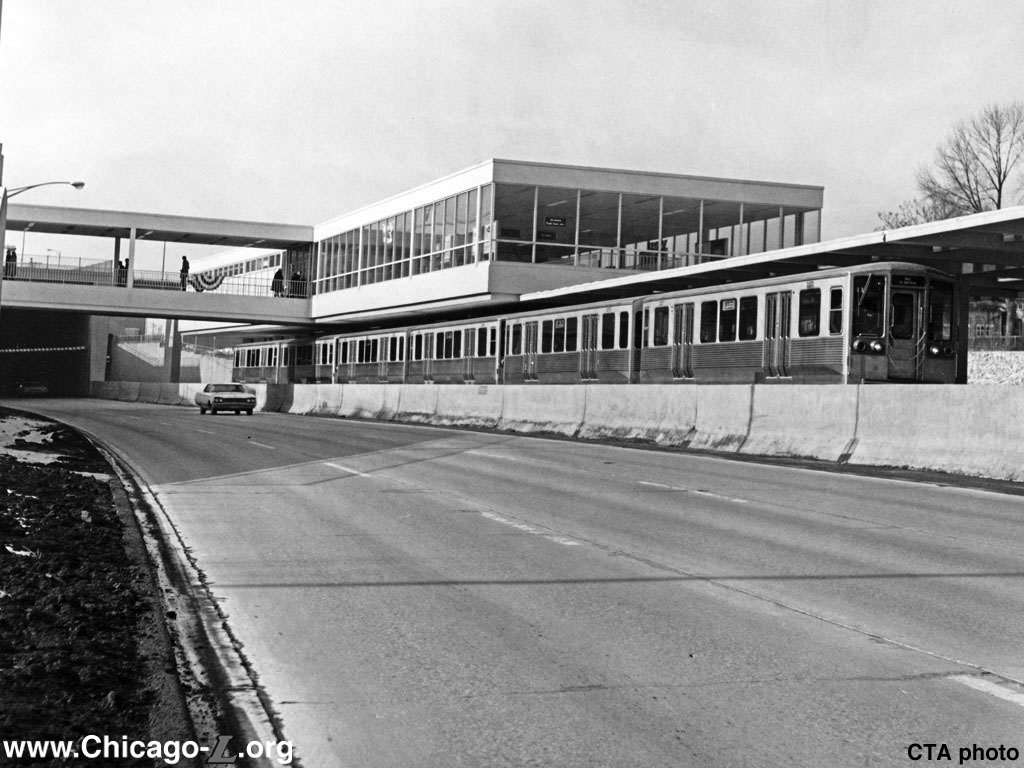
THEN “Blueline train at the Jefferson Park station: 1970” Photo courtesy of ‘Chicago L’ 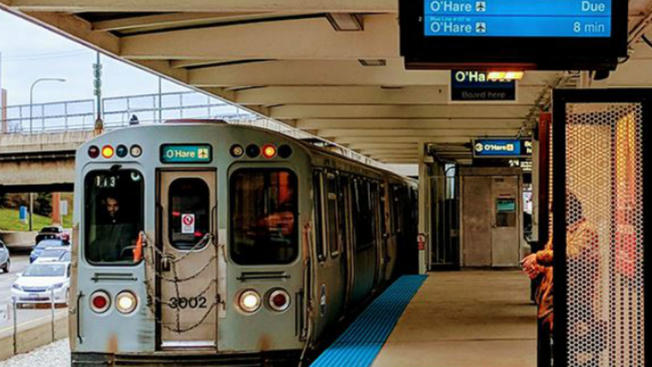
NOW “Blueline train at the Jefferson Park platform” Photo courtesy of ‘Chicago L’ 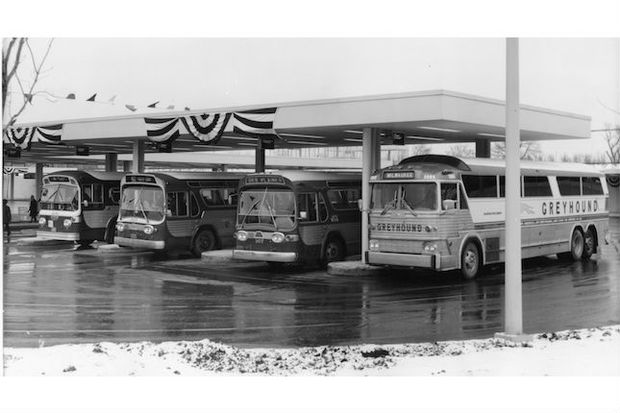
THEN “Jefferson Park transit station: 1970” Photo courtesy of ‘Chicago L’ 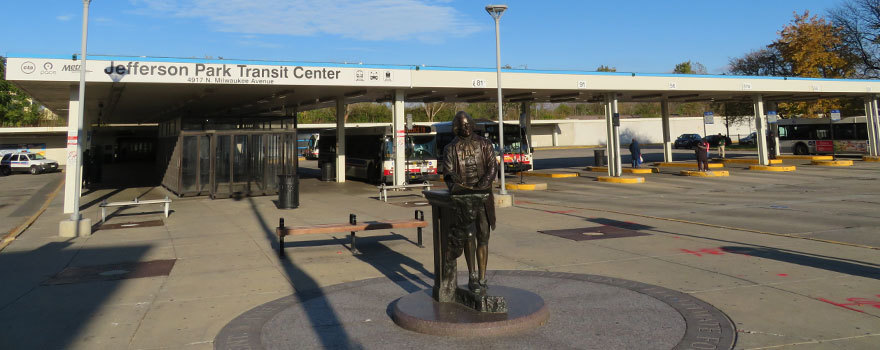
NOW “Jefferson Park Station: 2016” Photo courtesy of ‘Chicago L’
 Field Guide to the Changing City: Jefferson Park, Chicago